
All three brands make good cameras. The bigger differences are between models within each brand, and in how well the system is set up.
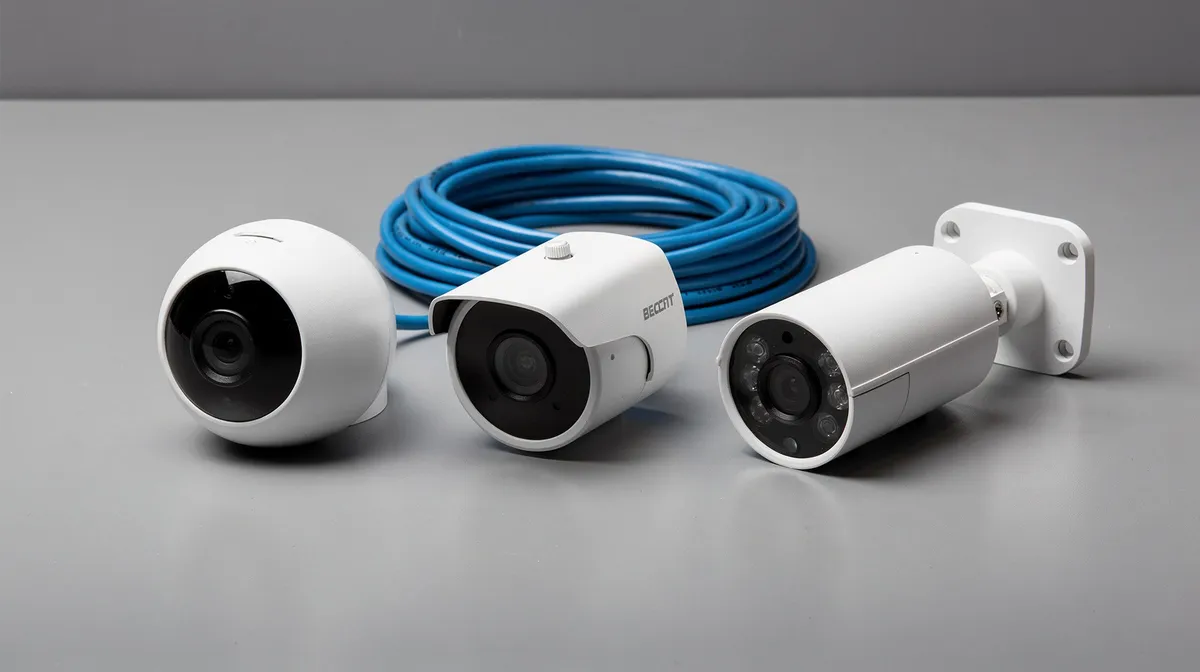
Installers tend to have favourite brands, and the reasons are usually practical: what the local supplier stocks, which app is easiest to support and which cameras rarely come back faulty. Here is how these three compare in day to day use.
Hikvision is the biggest of the three and has the widest range. Its ColorVu line keeps colour at night, and its AcuSense detection limits alerts to people and vehicles.
Dahua is very close in quality and range. Its colour night line is called Full-colour, its detection is WizSense, and its TiOC models put a camera, siren, strobe and speaker in one housing.
HiLook is Hikvision’s budget range. It works with the same recorders and apps but has fewer features. It suits secondary positions, or jobs where the budget needs to stretch over more cameras.
Four things matter more than the logo on the camera.
Sensor size. A bigger sensor collects more light, which shows most at night. Two 4K cameras can look very different after dark because of this.
Lens. A 2.8mm lens gives a wide view but makes people small. A 4mm or 6mm lens covers less but gives far more detail on a face at a distance. Choosing the right lens for each position is a big part of good planning.
Aperture. A lens rated F1.0 gathers much more light than one at F1.6 or F2.0. That is what allows colour footage at night without a bright light.
Bitrate. This is how much data the recorder saves each second for each camera. Too low and a 4K camera records soft, blocky footage. We set it properly on every install.
Standard cameras switch to infrared at night, giving black and white footage. It is dependable but loses colour, which can matter for identifying a car or clothing.
Colour night cameras use a large sensor and a fast lens, sometimes with a small warm light, to stay in colour after dark. For a driveway or front door, colour at night is often worth more than extra resolution. Suburban streets usually have enough street lighting for these cameras to work well.
Older cameras alert on any change in the image, so trees, shadows, insects and headlights all set them off. Most people turn the alerts off within a week. AcuSense and WizSense classify what they see and only alert for people or vehicles. Combined with detection zones drawn around your own property, alerts become useful again.
Dahua’s TiOC cameras and Hikvision’s equivalents add a siren, strobes and two way audio. When a person enters a zone during set hours, the camera reacts. On driveways and side gates, this is the feature with the most visible effect. See our active deterrence page.
Keep cameras and recorder in the same brand family where possible. Both brands’ apps handle live view, playback, saving clips and alerts. Neither is beautiful, but both work. We set up the app on every phone and show you how to find footage from last week before we leave.
Colour night cameras on the driveway and front door, where identification matters most. Standard infrared cameras on the side and back. An eight channel recorder with a drive sized for about thirty days. That combination usually costs less than four top end cameras and records more useful footage.
Whatever brand you choose, change the default password, keep the recorder behind your router and update the firmware.
It depends on the job. Dahua and Hikvision both have strong colour night and deterrence models, and HiLook suits budget positions. We pick models for each position rather than one brand for everything.
Cameras and recorders from different brands can often work together through ONVIF, but smart detection features usually only work within one brand family.
Some of these brands have been removed from sensitive government sites in Australia. For homes and small businesses, the precautions are the same with any brand: change default passwords, keep firmware updated and do not expose the recorder directly to the internet.
Fitted prices, the things that raise a quote, and what a bargain quote tends to leave out.
PlanningThe positions that matter most, when a fifth or sixth camera makes sense and how lens choice changes things.
Buying adviceHow wired, wifi and battery cameras differ, and where each one suits.
QueenslandThe rules for homes, complexes, rentals and businesses, in plain words. Not legal advice.
HiringWhich licences to check, what to ask and the warning signs to look for in a quote.
Wired 4K cameras for northside houses, with the cable hidden and the app set up on your phone.
BusinessCameras for shops, clinics, offices and workshops, planned around doors, counters and car parks.
RepairsFault finding for dead cameras, full drives and broken apps, and upgrades from old analogue gear.
DeterrenceCameras with strobes, a siren and smart detection that warn people off before they reach the door.
Cameras and cabling in Geebung 4034.
4053Cameras and cabling in McDowall 4053.
4012Cameras and cabling in Wavell Heights 4012.
4034Cameras and cabling in Zillmere 4034.
4034Cameras and cabling in Aspley 4034.
4032Cameras and cabling in Chermside 4032.
Tell us a little about the property and we will reply with a written quote that lists every item.
Thanks. Richard (QLD Lic #4930731, ACMA #A058225) now has your details and will check over the job and reply with a written, itemised price within 15 to 30 minutes during trade hours.