
Putting cameras on your own home is legal in Queensland and almost never causes a problem. The trouble spots are cameras aimed into neighbours' yards, recording audio, and businesses that have not thought about privacy.
This page is general information from people who install cameras, not lawyers. For a dispute, a tenancy question or a business with privacy obligations, talk to a solicitor or the relevant agency.
Recording your own property is lawful in Queensland. There is no permit to apply for, nothing to register, no rule that you must tell anyone and no limit on how many cameras you can have.
The federal Privacy Act 1988 generally does not cover people recording their own home for personal or household purposes. That is the key difference between a home system and a business one.
The household exemption is about protecting your own property. A camera deliberately aimed into a neighbour’s bedroom, bathroom or private yard is a different thing. Queensland’s Criminal Code has offences for recording people in private places or doing private acts without consent.
Even where no offence is involved, a camera pointed at a neighbour over and over can lead to a harassment or nuisance complaint. What the camera is for matters as much as where it is.
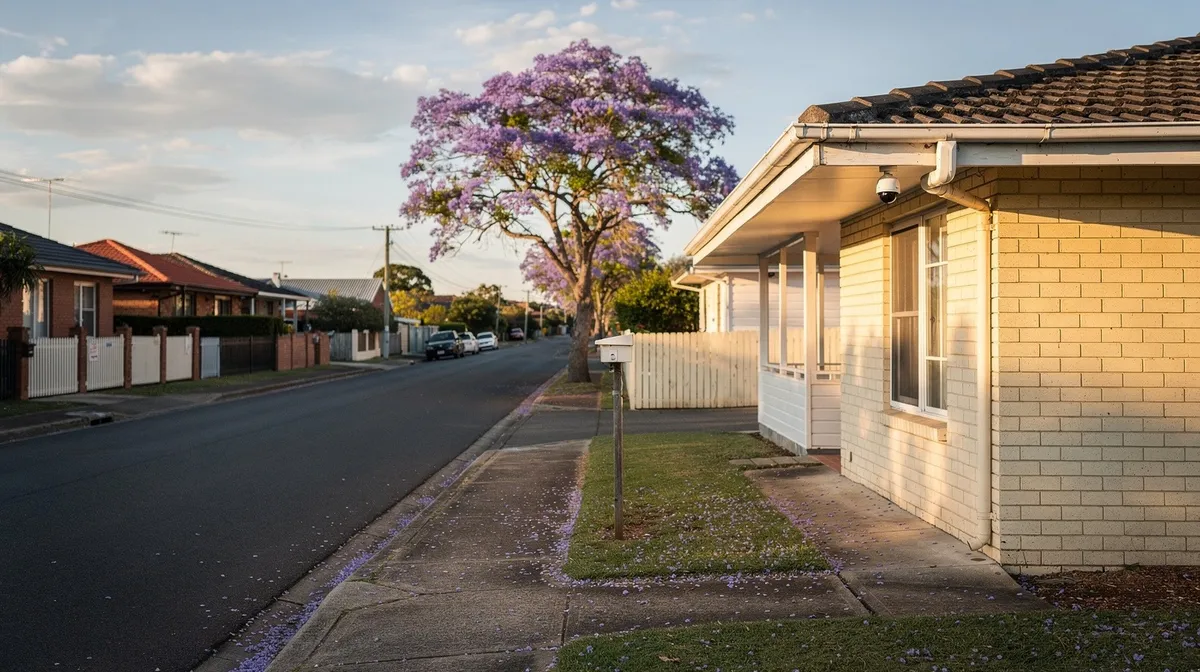
On suburban blocks where houses are a few metres apart, a side gate camera may see part of the neighbour’s house. Aim it along your own side path and use a privacy mask to black out any part of their window or yard.
A driveway or front door camera will usually see some of the footpath and road. That is generally accepted, because people walking in a public street do not expect privacy. Masking the public area is still worth doing. It keeps your recording focused on your own property and cuts down the alerts every time a car drives past.
Queensland’s Invasion of Privacy Act restricts using a listening device to record private conversations you are not part of. A camera microphone that records conversations on the footpath or over the fence can come close to that.
Many cameras ship with audio switched on. We turn it off unless there is a good reason. Talking to a courier through a doorbell is different from a microphone recording everything nearby for weeks.
In a complex, the outside walls, driveways, gardens and car parks are usually common property. Cameras there need body corporate approval, and by-laws may cover doorbell cameras too. Shared systems should have a clear purpose, limited access and a set period for keeping footage.
A business does not get the household exemption. Footage of people who can be identified is personal information. Organisations covered by the Privacy Act, generally those with more than $3 million in annual turnover plus some smaller ones such as health providers, have rules about how footage is collected, stored, used and shared.
In practice: signs at each entrance, a purpose for every camera, no cameras in toilets or change rooms, telling staff before cameras cover where they work, limited access, a set retention period and a process for requests. Smaller businesses outside the Act still benefit from doing the same.
Landlords can cover the outside and shared areas, but not inside a tenant’s home. Cameras should be described in the lease. Get advice before installing at a tenanted property.
If police ask for footage, give it to them. Exporting a clip to a USB stick takes a couple of minutes, and we show every customer how.
Your own property: fine. Some street and footpath: generally fine, better masked. Neighbours’ private areas: no. Recording others’ conversations: restricted. Complexes: body corporate approval. Businesses: signs, purpose, limited access, set retention. Rentals: advice first.
None of this is legal advice. For business privacy duties, the Office of the Australian Information Commissioner is a good starting point.
No law requires one for a home system. Some people put one up anyway, because it can put off opportunists.
Talk to them first, since many people do not realise what their camera sees. A privacy mask fixes it in minutes. If that fails, Queensland's dispute resolution centres can help.
Be cautious. Queensland law restricts recording private conversations you are not part of, so microphones are best left off unless you have a clear reason and have checked the rules.
It is risky. Naming someone as a thief online, especially if you have the wrong person, can lead to a defamation claim. Give the footage to police.
Fitted prices, the things that raise a quote, and what a bargain quote tends to leave out.
PlanningThe positions that matter most, when a fifth or sixth camera makes sense and how lens choice changes things.
Buying adviceHow wired, wifi and battery cameras differ, and where each one suits.
HiringWhich licences to check, what to ask and the warning signs to look for in a quote.
BrandsHow the three brands differ on night vision, detection, deterrence and apps, and what matters more than the logo.
Wired 4K cameras for northside houses, with the cable hidden and the app set up on your phone.
BusinessCameras for shops, clinics, offices and workshops, planned around doors, counters and car parks.
RepairsFault finding for dead cameras, full drives and broken apps, and upgrades from old analogue gear.
DeterrenceCameras with strobes, a siren and smart detection that warn people off before they reach the door.
Cameras and cabling in Wavell Heights 4012.
4034Cameras and cabling in Zillmere 4034.
4034Cameras and cabling in Aspley 4034.
4032Cameras and cabling in Chermside 4032.
4032Cameras and cabling in Chermside West 4032.
4034Cameras and cabling in Geebung 4034.
Tell us a little about the property and we will reply with a written quote that lists every item.
Thanks. Richard (QLD Lic #4930731, ACMA #A058225) now has your details and will check over the job and reply with a written, itemised price within 15 to 30 minutes during trade hours.